All published articles of this journal are available on ScienceDirect.

Cyclophosphamide for End-Stage, Treatment-Refractory Quadriplegic Chronic Inflammatory Demyelinating Polyradiculoneuropathy: A Case Report
 iD
Prakash Kathan1
iD
Muhammad Ayob1
iD
Charlene Balton1
iD
Vikash Lala1
iD
Adam Mahomed1
iD
iD
Prakash Kathan1
iD
Muhammad Ayob1
iD
Charlene Balton1
iD
Vikash Lala1
iD
Adam Mahomed1
iD
Authors Info & Affiliations
Abstract
Background
Chronic Inflammatory Demyelinating Polyradiculoneuropathy (CIDP) is an acquired, immune-mediated disorder characterised by progressive and/or relapsing motor and sensory dysfunction. Standard management includes intravenous immunoglobulin, corticosteroids, and plasma exchange, but guidance is limited for patients with severe, refractory disease.
Case Presentation
A 49-year-old man was diagnosed with CIDP following progressive sensory and motor symptoms and confirmatory electrophysiological and cerebrospinal fluid findings. Initial treatment with intravenous immunoglobulin led to transient improvement, but he subsequently developed frequent relapses despite dose escalation, repeated high-dose corticosteroids, rituximab, and multiple courses of plasma exchange. His disease course was further complicated by axonal involvement, monoclonal gammopathy of undetermined significance, and later confirmed Sjögren’s syndrome overlap. During the clinical course he experienced a catastrophic relapse in the setting of end-stage, treatment-refractory quadriplegic CIDP, with bulbar and respiratory involvement, resulting in combined respiratory, neuromuscular, and nutritional failure requiring intensive care admission, mechanical ventilation, and tracheostomy. Intravenous cyclophosphamide was initiated during this critical phase in combination with immunoglobulin therapy. Neurological deterioration stabilised, respiratory function improved, and he was successfully weaned from ventilation. On continued combined therapy, he achieved sustained clinical stability with meaningful neurological recovery.
Conclusion
This case illustrates the potential role of cyclophosphamide as a rescue and maintenance therapy in severe, treatment-refractory chronic inflammatory demyelinating polyradiculoneuropathy. It highlights its possible utility in aggressive disease phenotypes with systemic autoimmune overlap when standard therapies fail.
1. INTRODUCTION
Chronic Inflammatory Demyelinating Polyradiculoneuropathy (CIDP) is an acquired, immune-mediated disorder characterised by progressive and/or relapsing motor and sensory dysfunction. The disease spectrum it encompasses is broad, ranging from typical symmetric sensorimotor neuropathy to multiple atypical variants [1, 2]. Current management strategies include targeted immunomodulation, which usually includes Intravenous Immunoglobulin (IVIG), corticosteroids, as well as plasma exchange. While these treatments remain the mainstay of care, long-term disease control is often complicated by a variable treatment response, cumulative toxicity, and the absence of reliable biomarkers to guide treatment selection or escalation [3]. As a result of this variability, a subset of cases fails to achieve sustained remission despite optimal use of standard therapies. This is defined as “Refractory CIDP”, which represents a high-risk phenotype that accounts for up to 20-30% of affected patients [4]. This subgroup is commonly linked to axonal involvement, paraproteinaemia, and systemic autoimmune overlap disorders such as Sjögren’s syndrome. These associations result in greater disability, poorer treatment response, and increased morbidity [4, 5]. In severe cases, disease progression may extend beyond limb weakness to involve bulbar or respiratory function, resulting in life-threatening complications. In this context, more aggressive immunosuppressive therapies have been explored. Cyclophosphamide, a potent alkylating agent with established efficacy in severe autoimmune diseases, offers a biologically plausible option for controlling aggressive immune-mediated neuropathy. However, evidence supporting its use in CIDP remains limited to small series and case reports, with no consensus regarding patient selection or timing. In lieu of this, our case report contributes to the existing literature by describing the use of cyclophosphamide in a patient with severe, treatment-refractory CIDP complicated by autoimmune overlap, who developed catastrophic relapse with complete respiratory failure and profound functional dependence. Such extreme disease severity managed with cyclophosphamide has not, to our knowledge, been described in existing CIDP literature.
2. CASE PRESENTATION
A 49-year-old male with no significant prior medical or neurological history presented with a progressive peripheral neuropathy consistent with Chronic Inflammatory Demyelinating Polyradiculoneuropathy (CIDP). He first developed distal paraesthesia involving the toes and fingers in 2023, which gradually progressed over several weeks. Thereafter, he was formally diagnosed with CIDP following compatible nerve conduction studies (Table 1) and Cerebrospinal Fluid (CSF) analysis, which demonstrated albuminocytologic dissociation on lumbar puncture the same week. Initial treatment consisted of Intravenous Immunoglobulin (IVIG), administered as an induction dose over five days, followed by planned monthly maintenance infusions. The patient demonstrated an initial favourable response, with stabilisation of symptoms after the first cycle and partial reversal of sensory deficits by the second month. Maintenance IVIG was continued, with a decision made in month 3 of maintenance treatment to extend the infusion interval from four to six weeks as the patient had shown features of clinical improvement and stabilisation. However, following the first six-weekly interval infusion, the patient experienced a clinical relapse characterised by recurrence of distal paraesthesia and objective deterioration in proximal and distal limb strength. The infusion interval was reverted to four-weekly dosing, but subsequent IVIG infusions administered failed to restore neurological function. Subsequently, over 3 months, the patient developed progressive sensory involvement extending to the lips, tongue and nasal region, followed by worsening limb weakness. By January 2025, he exhibited marked functional decline with severe weakness of both upper and lower limbs. Clinically, he was noted to have significant motor impairment, prompting escalation of therapy with high-dose intravenous methylprednisolone in combination with an increased dose of IVIG. Despite this, his clinical condition continued to deteriorate. Further steroid pulses were administered in February and March 2025, with transient and incomplete improvement. Given the failure of IVIG and corticosteroids, the disease was considered treatment-refractory, and escalation to immunosuppressive therapy was recommended. Thus, the patient was escalated to rituximab therapy with intravenous methylprednisolone. In spite of further treatment escalation, the patient’s symptomatology rapidly worsened as he developed profound tetraparesis and loss of independent feeding ability. Additionally, repeat nerve conduction studies demonstrated marked worsening, with severely slowed conduction velocities and near-absent lower limb responses (Table 1). Following this, the patient was re-admitted. A decision was made to initiate plasma exchange, resulting in partial neurological improvement. Upper limb strength improved sufficiently to allow independent feeding; however, he remained unable to stand or walk at discharge. Despite ongoing intensive physiotherapy, he relapsed again within weeks, with progressive limb weakness, new bulbar involvement affecting voice and swallowing, accompanied by nasal regurgitation, and further deterioration on nerve conduction studies. Repeat lumbar puncture demonstrated persistently elevated CSF protein levels and subsequent investigations identified a monoclonal gammopathy of undetermined significance, while evaluation for POEMS syndrome (Polyneuropathy, Organomegaly, Endocrinopathy, Monoclonal protein, and Skin changes) was negative. Serological testing raised suspicion for Sjögren’s syndrome, which was subsequently confirmed on minor salivary gland biopsy demonstrating focal lymphocytic sialadenitis with a focus score ≥ 1 and a CD3/CD4-positive T-cell–predominant infiltrate (Figs. 1, 2), consistent with autoimmune overlap. Despite multiple cycles of IVIG and plasma exchange, the patient’s neurological status continued to deteriorate, with progression to near-complete paralysis of all four limbs and impaired bulbar function. He subsequently developed respiratory distress due to an inability to clear secretions, progressing to hypoxaemic respiratory failure requiring intubation, mechanical ventilation, and eventual tracheostomy to facilitate prolonged ventilatory support. Despite ongoing IVIG, his neurological condition remained critical. In view of the fulminant, life-threatening, treatment-refractory disease course, cyclophosphamide was initiated as a rescue immunosuppressive therapy, administered intravenously over three days, alongside continued IVIG. Monthly intravenous cyclophosphamide (1 g per cycle) was subsequently continued with standard supportive measures, including intravenous hydration, Mesna to prevent haemorrhagic cystitis, and antiemetic prophylaxis, for a cumulative dose of 4 g. Full blood count, renal and liver function tests, and urinalysis were performed before each cycle, with surveillance for cytopenias, infection, haemorrhagic cystitis, and other treatment-related adverse events; no significant toxicities were observed. Following cyclophosphamide initiation, the patient stabilised neurologically and was gradually weaned from sedation and ventilatory support. Cognitive function remained intact throughout. Over subsequent weeks, he demonstrated sustained neurological improvement, with recovery of upper limb function surpassing his pre-ICU baseline and gradual improvement in bulbar and respiratory function. He was successfully liberated from mechanical ventilation and transferred for rehabilitation. At the time of latest follow-up, roughly 3 months post ICU-discharge, the patient remained relapse-free on a combined regimen of two-weekly IVIG and maintenance intravenous cyclophosphamide. This represented the longest period of sustained disease stability since onset, contrasting sharply with his prior pattern of frequent catastrophic relapses. The patient's clinical course is summarised chronologically in Table 2.
| Electrophysiological Parameter | Baseline Study – August 2025 | Follow-up Study – December 2025 | Interval Change / Interpretation |
|---|---|---|---|
| Motor Nerve Conduction Studies: Distal Latencies and Conduction Velocities | Prolonged distal latencies (median nerve 10.4 milliseconds) and slowed conduction velocities (27.2 meters per second). | Further prolongation of distal latencies (median nerve right 22.0 milliseconds, left 16.4 milliseconds) and extreme slowing of conduction velocities (11.5–11.8 meters per second). | Severe progressive demyelination characterised by marked latency prolongation and significant slowing of conduction velocity. |
| Motor Nerve Conduction Studies: Compound Muscle Action Potential Amplitudes | Reduced amplitudes in upper limbs (median nerve 1.0 millivolt); lower limbs inexcitable and unstimulatable. | Further significant reduction in upper-limb compound muscle action potential amplitudes (median nerve: right 429 microvolts, left 490 microvolts), with persistent lower-limb inexcitability. | Progressive axonal loss or severe conduction block indicated by further reduction in compound muscle action potential amplitudes. |
| Sensory Nerve Conduction Studies: Sensory Nerve Action Potentials | Recordable but low-amplitude upper-limb sensory nerve action potentials (median nerve 4.5 microvolts; ulnar nerve 2.8 microvolts), with absent sural sensory responses. | Loss of previously recordable sensory nerve action potentials; all upper and lower limb sensory nerves now inexcitable. | Progression to complete loss of recordable sensory responses, indicating total sensory inexcitability. |
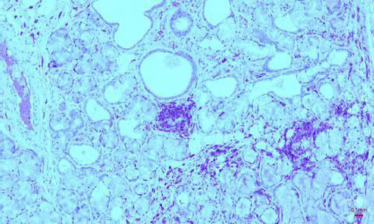
Minor salivary gland biopsy demonstrating focal lymphocytic sialadenitis with a focus score ≥1 on haematoxylin and eosin staining.
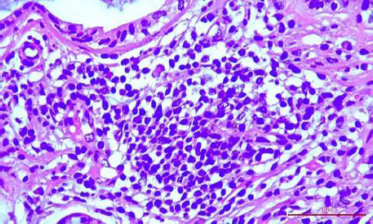
Immunohistochemistry showing CD3/CD4-positive T-cell–predominant lymphocytic infiltrate.
Table 2.
| Timepoint | Clinical Course |
|---|---|
| Symptom onset (2023) | Progressive distal paraesthesia followed by diagnosis of CIDP based on nerve conduction studies and CSF albuminocytologic dissociation. |
| Initial treatment | IVIG induction followed by maintenance therapy with initial clinical improvement. |
| Disease progression | Relapse despite IVIG optimisation, high-dose corticosteroids, rituximab, and plasma exchange, with progression to tetraparesis. |
| Further evaluation | Repeat investigations demonstrated worsening electrophysiological findings, MGUS, and biopsy-confirmed Sjögren's syndrome overlap. |
| Critical illness | Development of bulbar dysfunction and respiratory failure requiring ICU admission, mechanical ventilation, and tracheostomy. |
| Rescue therapy | Intravenous cyclophosphamide initiated alongside continued IVIG. |
| Outcome | Neurological stabilisation, liberation from mechanical ventilation, transfer for rehabilitation, and sustained relapse-free clinical stability at 3-month follow-up. |
3. CASE DISCUSSION
There is currently no universally accepted definition of refractory Chronic Inflammatory Demyelinating Polyradiculoneuropathy (CIDP). Across the literature, refractory CIDP is generally defined by inadequate response or intolerance to first-line immunomodulatory therapies, namely intravenous immunoglobulin, corticosteroids, and plasma exchange. Observational studies and expert reviews suggest that approximately 20–30% of patients meet criteria for treatment refractoriness, with a smaller subset demonstrating failure of multiple therapeutic modalities, including second-line immunosuppressive agents [4, 6]. In our case, refractoriness encompassed not only resistance to therapy but progression to a clinically “end-stage” form of CIDP, marked by the triad of respiratory failure, severe neurological impairment, and nutritional failure. Refractory CIDP patient populations usually have substantial clinical burden, including progressive disability, treatment dependence, and cumulative toxicity related to prolonged immunotherapy. Such catastrophic progression is increasingly recognised to occur in the context of specific biological and clinical features that define a high-risk CIDP phenotype: Firstly, axonal injury, which is identified on electrophysiological studies or nerve biopsy, represents a key marker of disease severity, reflecting irreversible neural damage and correlating with reduced treatment responsiveness and long-term disability [7]. In conjunction, autoimmune overlap syndromes, particularly Sjögren’s syndrome, further amplify disease severity. Neurological involvement in Sjögren’s syndrome is well described phenomenon and may manifest as severe immune-mediated neuropathy, often associated with more extensive nerve injury and systemic immune activation [8]. In addition to the above, paraproteinaemia, including Monoclonal Gammopathy of Undetermined Significance (MGUS), is also increasingly recognised in patients with immune-mediated neuropathies and suggests an underlying state of immune dysregulation that may alter disease behaviour and therapeutic response [3]. Together, these features may drive aggressive disease progression, extending from limb weakness to bulbar and respiratory involvement and occasionally requiring intensive care and ventilatory support [6, 7]. In the setting of such aggressive disease biology, conventional immunomodulatory therapies occasionally fail to achieve sustained disease control. Although IVIG remains a cornerstone of CIDP management, prolonged treatment is often complicated by treatment dependence and tachyphylaxis, with diminishing clinical response over time necessitating escalating doses or shortened infusion intervals [9]. This pattern reflects an inability of IVIG to adequately suppress ongoing immune-mediated nerve injury in severe or rapidly progressive disease. Additionally, while corticosteroids are effective in some CIDP phenotypes, they also demonstrate variable efficacy in refractory cases and are limited by cumulative toxicity with long-term use [10]. In conjunction with the above, plasma exchange has been used to provide transient clinical improvement by removing circulating pathogenic factors; however, benefits are typically short-lived, requiring repeated infusions, particularly in those with severe disease [10, 11]. Similarly, second-line immunotherapies such as rituximab have shown some benefit in selected CIDP subgroups, yet responses remain inconsistent [11]. The principal pharmacological therapies currently used in the management of CIDP are summarised in Table 3, while their relative costs and advantages are outlined in Table 4. Collectively, these limitations showcase that alternative immunosuppressive strategies are needed, especially when disease progression persists despite standard escalation. In the present case, cyclophosphamide was selected as rescue therapy because the patient continued to deteriorate despite intravenous immunoglobulin, corticosteroids, plasma exchange, and rituximab, progressing to respiratory failure. Its broad immunosuppressive effects were considered appropriate in the setting of fulminant, treatment-refractory disease. In the context of aggressive, treatment-refractory CIDP characterised by multisystem immune dysregulation, cyclophosphamide represents a possible therapeutic option due to its broad immunosuppressive effects. Unlike targeted immunotherapies, cyclophosphamide acts on multiple components of the immune system, including B cells, T cells, and plasma cells, thereby suppressing immune responses implicated in CIDP pathogenesis [12, 13]. The evidence supporting cyclophosphamide use in CIDP is quite limited and mainly exists in small case series and case reports, typically involving patients with severe and/or rapidly progressive disease. However, pooled analyses do seem to suggest meaningful clinical responses in a substantial proportion of refractory cases [14]. Importantly, cyclophosphamide may succeed where more selective agents such as rituximab fail, as it does not rely on the presence of a specific antibody-mediated mechanism and can suppress the overall immune processes. The role of cyclophosphamide in refractory CIDP has been most comprehensively evaluated in a systematic review and meta-analysis of 13 studies comprising 83 patients treated with cyclophosphamide following failure of standard therapies [14]. In this cohort, a pooled clinical response rate of 68% was observed, with a relatively low incidence of serious adverse events, supporting its potential utility in carefully selected cases [14]. Importantly, the authors demonstrated a strong negative correlation between disease duration prior to cyclophosphamide initiation and functional improvement, suggesting greater benefit when employed earlier in aggressive disease courses [14]. This potency, however, is counterbalanced by an 8% adverse reaction rate and the risk of serious side effects, necessitating careful patient monitoring [14]. Clinicians evaluating alternatives often consider agents with superior safety profiles but differing levels of evidence. Rituximab, for instance, shows considerable effectiveness in seropositive node-paranodopathies [11, 15], but this promise is tempered by conflicting evidence, as a recent controlled study showed no additional effect compared to placebo [16], underscoring that its role requires further investigation [15, 16]. Similarly, mycophenolate mofetil is a well-tolerated option occasionally used as a steroid-sparing agent in milder forms of CIDP, with its effectiveness supported by case series and observational data [15, 17, 18]. Further down the efficacy ladder, azathioprine’s 27% response rate, which is less than half that of cyclophosphamide, cementing it is status for use in milder disease or as a long-term steroid-sparing strategy [11]. At the other end of the spectrum, cyclosporine may be considered for intractable cases but is severely limited by a high rate of discontinuation due to severe side effects [11, 19], despite reports of benefit in IVIG-dependent or highly refractory disease [19]. Ultimately, the selection of an immunosuppressant involves a strategic trade-off between efficacy, safety, and disease severity, positioning cyclophosphamide as a powerful tool for the most severe, treatment-refractory patients, while other agents provide a spectrum of valuable alternatives tailored to different patient needs and risk tolerances. Although cyclophosphamide may be effective in selected patients with treatment-refractory CIDP, its use requires careful consideration of potential long-term toxicities. Clinicians should remain vigilant for dose-dependent bone marrow suppression [20] and the associated increased risk of infection, while recognising the potential for gonadotoxicity and infertility, particularly in younger patients receiving higher cumulative doses [20, 21]. In addition, prolonged exposure has been associated with an increased risk of secondary malignancies, including bladder cancer [20, 21]. Careful patient selection, counselling regarding fertility preservation where appropriate, and ongoing clinical and laboratory monitoring are therefore essential when considering cyclophosphamide therapy for refractory CIDP. The clinical trajectory of these cases closely mirrors that of the present patient, reinforcing the rationale for cyclophosphamide as a rescue immunosuppressive strategy in catastrophic, refractory CIDP. Nevertheless, the observed clinical improvement should be interpreted cautiously, as ongoing intravenous immunoglobulin and supportive intensive care measures may also have contributed to the patient's recovery. To our knowledge, this represents the first reported case from the African setting describing the use of cyclophosphamide in end-stage, treatment-refractory CIDP complicated by extensive multi-organ failure, expanding both the geographic and phenotypic boundaries of the current literature.
| Medication/Class | Typical Role | Current Status | Key Considerations |
|---|---|---|---|
| Intravenous Immunoglobulin (IVIG) | First-line | Standard of care | Rapid onset; effective for induction and maintenance; treatment dependence may occur [15, 22]. |
| Subcutaneous Immunoglobulin (SCIG) | Maintenance | Current | Alternative to IVIG for maintenance therapy with comparable efficacy and greater convenience in selected patients [15]. |
| Corticosteroids (prednisone, prednisolone, methylprednisolone) | First-line | Standard of care | Effective in many patients; limited by long-term adverse effects [15, 22]. |
| Plasma exchange | First-line rescue | Standard of care | Rapid but transient benefit; often reserved for severe relapses or refractory disease [15, 22]. |
| Azathioprine | Steroid-sparing | Historical/Current | Widely used despite limited high-quality evidence [23]. |
| Mycophenolate mofetil | Steroid-sparing | Current | Frequently used in refractory disease; evidence remains limited [23]. |
| Methotrexate | Steroid-sparing | Historical | Limited evidence supporting routine use [23]. |
| Cyclosporine | Second-line | Historical/Current | May benefit selected refractory patients but limited by toxicity [23]. |
| Cyclophosphamide | Rescue therapy | Current (selected refractory cases) | Potent immunosuppressant reserved for severe treatment-refractory disease [15]. |
| Rituximab | Second-line | Current | Increasingly used in refractory disease, particularly in autoimmune overlap syndromes and nodal/paranodal antibody-associated disease [15]. |
| Medication/Class | Cost (General) | Benefit (General) | Comments |
|---|---|---|---|
| IVIg | High | Rapid, effective in most; safe | Expensive, requires repeated infusions [15] |
| Subcutaneous Immunoglobulin | High | Similar to IVIg, more convenient | May reduce hospital visits, cost similar to IVIg [24] |
| Corticosteroids | Low | Effective, slower onset | Many side effects with long-term use [15] |
| Plasma Exchange | Moderate–High | Effective, especially in acute/severe cases | Inconvenient, requires specialised centers [15] |
| Cyclophosphamide, Rituximab, Mycophenolate | Moderate–High | Used in refractory cases, variable efficacy | Limited evidence, potential for serious side effects [21, 24] |
| Other Immunosuppressants | Low–Moderate | Variable, often adjunctive | Used when first-line fails or is contraindicated. Variable cost [24] |
4. LIMITATIONS
This report is limited by its single-patient design, precluding generalisation of the findings. In addition, the relatively short follow-up period limits assessment of long-term efficacy and safety. As standardised functional outcome measures (e.g., MRC muscle strength grading, INCAT disability score, modified Rankin Scale, or Barthel Index) were not collected prospectively, objective quantification of treatment response was limited. Finally, the patient received multiple therapeutic interventions during his disease course, including IVIG, corticosteroids, plasma exchange, and intensive supportive care, with IVIG and supportive care continuing alongside cyclophosphamide. Consequently, the relative contribution of cyclophosphamide to the observed clinical improvement cannot be isolated, and a causal relationship cannot be established from this single case. The observed temporal association should therefore be interpreted cautiously and should not be considered evidence of the independent efficacy of cyclophosphamide.
CONCLUSION
This study’s case illustrates the potential role of cyclophosphamide as a rescue immunosuppressive therapy in catastrophic, end-stage, treatment-refractory CIDP marked by profound neurological disability, functional dependence, and life-threatening multi-system involvement. The patient’s sustained clinical stabilisation following cyclophosphamide initiation occurred in the context of continued intravenous immunoglobulin and comprehensive intensive supportive care and contrasts sharply with his prior pattern of frequent, severe relapses despite maximal standard therapy, which had resulted in prolonged immobility, loss of independent function, and a marked reduction in quality of life. When interpreted alongside existing evidence, this experience supports the cautious use of cyclophosphamide in carefully selected patients with aggressive disease biology and extreme disease burden. However, as improvement occurred alongside concurrent therapies, a direct therapeutic effect of cyclophosphamide cannot be definitively established. Further prospective studies are needed to define optimal timing, patient selection, and long-term safety; therefore, this case should be interpreted as supporting further investigation of cyclophosphamide as a potential component of multimodal therapy in life-threatening, end-stage refractory CIDP, rather than establishing its independent efficacy.
AUTHORS’ CONTRIBUTIONS
The authors confirm contribution to the paper as follows: M.V., A.M.: Study conception and design; M.V., M.A.: Data collection; M.V., M.A., P.K., C.B., V.L., A.M.: Analysis and interpretation of results; M.V., M.A.. P.K., C.B., V.L.: Draft manuscript; and A.M.: provided critical revision of the manuscript and senior academic supervision. All authors reviewed the results and approved the final version of the manuscript.
LIST OF ABBREVIATIONS
| CIDP | = Chronic Inflammatory Demyelinating Polyradiculoneuropathy |
| CSF | = Cerebrospinal Fluid |
| ICU | = Intensive Care Unit |
| INCAT | = Inflammatory Neuropathy Cause and Treatment |
| IVIG | = Intravenous Immunoglobulin |
| MGUS | = Monoclonal Gammopathy of Undetermined Significance |
| MRC | = Medical Research Council |
| MRS | = Modified Rankin Scale |
ETHICS APPROVAL AND CONSENT TO PARTICIPATE
The study was approved by the University of the Witwatersrand Human Research Ethics Committee (Medical). Approval number M260229.
HUMAN AND ANIMAL RIGHTS
All procedures involving human participants were conducted in accordance with the ethical standards of the committee responsible for human experimentation (institutional and national), and with the Helsinki Declaration of 1975, as revised in 2013.
CONSENT FOR PUBLICATION
Written informed consent was obtained from the patient for publication of this case report and accompanying images.
AVAILABILITY OF DATA AND MATERIALS
All data generated or analysed during this study are included in this published article.
ACKNOWLEDGEMENTS
The authors are grateful to the patient for providing informed consent and allowing this case to be shared.